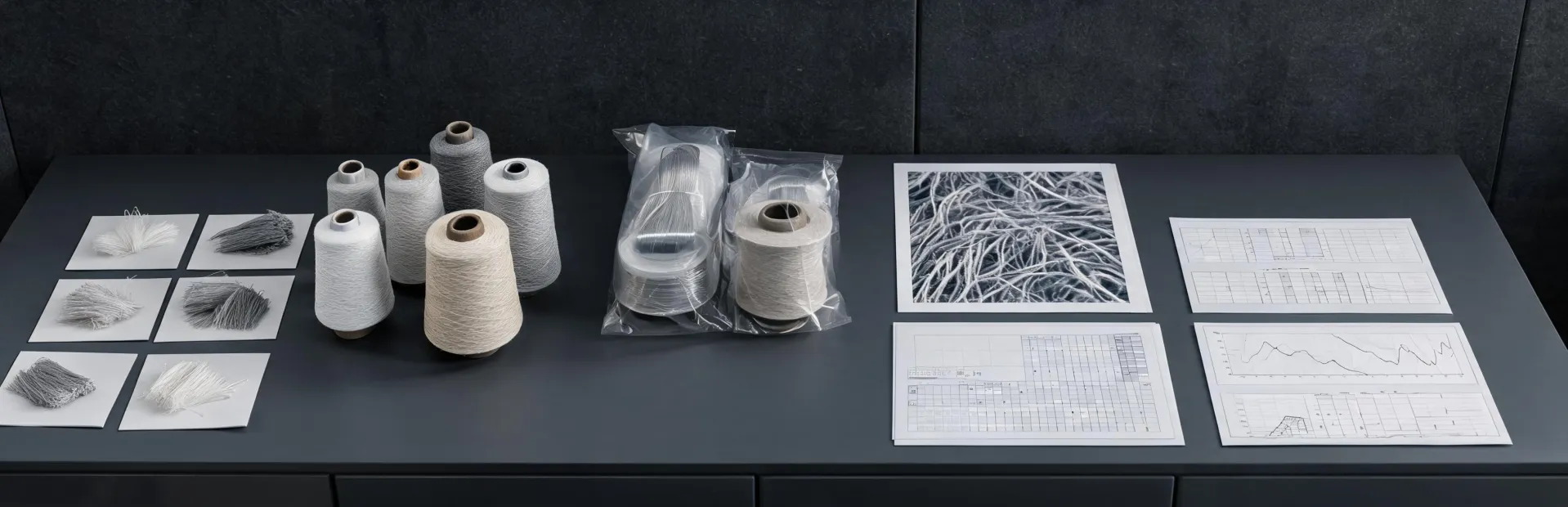
Fiber and yarn specification records beside laboratory samples

Material definition and conversion support

Lenzing services specify what a fiber or yarn trial must answer

Each inquiry is translated into identity, material form, linear density, finish, conversion, evidence and commercial fields. Trial samples remain separate from production-lot approval.

Structured service table

Inputs and controlled outputs

StageBuyer inputOutputEvidence boundary
End-use screenApplication, process, handfeel or performance objectiveMaterial-form briefNo fiber selected by marketing name alone
Fiber definitionIdentity, staple or filament form, fineness, length, blendComparable fiber requirementFinished-yarn behavior not inferred
Yarn definitionLinear density, denier or count, twist, luster, finish, packageConversion-ready yarn briefFabric performance needs downstream validation
Trial planningSpinning, knitting, weaving, nonwoven or sewing processNamed trial and approval questionTrial lot does not approve production lot
Evidence reviewMethod, specimen, conditioning, result and document scopeOrder-specific evidence listClaims stay with the reported article
Commercial handoffMOQ, quantity, lead time, Incoterm, destinationComparable quotation fieldsFinal quotation controls price and timing

Methodology

Five questions before a production release

  1. 1

    What material form enters the process?

    Define staple fiber, filament, spun yarn or thread and identify the blend, cut length, fineness, linear density, denier, count, ply or twist fields that apply.

  2. 2

    Which downstream process will be used?

    Spinning, knitting, weaving, nonwoven formation and sewing impose different package, finish, cohesion, strength and handling requirements.

  3. 3

    What does the trial approve?

    A small fiber blend, spinning trial, knitted panel, woven handloom or seam trial answers a defined conversion question. It does not approve every color, finish or future lot.

  4. 4

    Which evidence applies?

    Test method, conditioning, specimen, direction, article, lot and result are reviewed together. Chain-of-custody or material-content documents are checked by entity, scope and validity.

  5. 5

    What changed before bulk?

    Fiber source, blend, finish, color, package, twist, conversion setting and production lot remain visible. Relevant trials are repeated after a material change.

Convert the application into a material trial

Submit the material form, target count or denier, conversion process, evidence needs and quantity.

Submission is subject to the Privacy Policy.